(206) 209-0988 Menu

Healera Logo Post-Surgical Complications & Eligible Revisions Covered by Healera — At No Additional Cost

Call or Text (206) 209-0988

se habla espanol
Instant Quote Now Injectables Med Spa TV Series Contact Us

📅 Complimentary Surgery Consultations Available with Our Physician Assistant - Schedule Today →

Melasma patches tend to return the moment the weather turns sunny, a hormone prescription changes, or the skin gets overheated. Creams act slowly, peels can irritate, and heat-based devices sometimes leave the discoloration darker than before. Pico laser treatment for melasma at Allure Esthetic takes a different route: ultra-short bursts of energy fracture pigment into fine particles while sending far less heat into the skin, so patches lighten in stages without provoking the pigment cells that cause them.

Licensed aestheticians perform each session under the guidance of a board-certified cosmetic surgeon. Every plan begins with a close examination of the skin, because melasma near the surface requires a different approach than melasma that sits deep.

What Is Melasma and Why Is It So Hard to Treat?

What Is Melasma and Why Is It So Hard to Treat?

Melasma is a chronic skin condition that produces flat tan, brown, or gray-brown patches, usually on both sides of the face at once. The cheeks, forehead, upper lip, bridge of the nose, and jawline are the most common sites. It typically begins in adulthood and affects women far more often than men.

The condition is different from an ordinary sun spot in three ways:

  • It comes from overactive pigment cells, not a single injury: A sun spot is the result of past damage in one small area. Melasma comes from melanocytes that stay switched on, which is why it reacts to the same triggers again and again.
  • It responds to hormones as much as sunlight: Pregnancy, oral contraceptives, hormone therapy, and thyroid changes are common starting points. UVA rays, heat from saunas or stovetops, and visible light from screens all push it darker. Gray Seattle weather offers little protection, since UVA passes through cloud cover.
  • It can sit at more than one depth: Pigment may rest in the surface layer, the deeper dermis, or both. Deeper pigment is largely out of reach for topical products, which explains why many patients see only partial results from creams.

For these reasons, melasma laser treatment is planned conservatively, with gentler settings, more sessions, and a long-term maintenance strategy rather than a one-time fix.

What Is Pico Laser Treatment for Melasma?

What Is Pico Laser Treatment for Melasma?

Pico laser treatment is a non-surgical pigment procedure that fires laser energy in pulses lasting one trillionth of a second. At that speed, the energy acts on melanin like a pressure wave rather than a heat source. Pigment clusters fracture into fragments small enough for the lymphatic system to carry away over the following weeks.

Nanosecond and IPL devices, by contrast, depend on thermal energy to lighten pigment. That heat spreads into surrounding tissue and can activate the very cells responsible for melasma. Pico laser pigmentation removal avoids most of that thermal load, which makes it a practical option for melasma and other discoloration across a wide range of skin types.

What Can Pico Laser Treat?

Pico laser treatment for pigmentation covers a broad set of discoloration concerns on the face, neck, chest, and hands:

01

Melasma in the epidermis, dermis, or both layers

02

Sun spots and age spots from cumulative UV exposure

03

Freckles that have darkened or multiplied over time

04

Post-inflammatory hyperpigmentation left by acne, eczema, or minor injuries

05

Cafe-au-lait patches and other flat brown birthmarks

06

Blotchy, uneven skin tone from years of sun damage

Isolated spots often respond within one or two visits. Melasma calls for a slower approach because the underlying melanocytes remain active even after the visible pigment has cleared.

How Does Pico Laser Pigment Removal Work?

How Does Pico Laser Pigment Removal Work?
  1. Depth assessment: The provider identifies whether the melasma is epidermal, dermal, or mixed, often with a Wood's lamp, and selects the wavelength to match.
  2. Low-fluence delivery: Melasma is treated with gentler energy and wider spot sizes than tattoos or isolated sun spots to avoid provoking melanocytes.
  3. Fragmentation and clearance: Picosecond pulses shatter melanin into fine particles, and the body removes them gradually between sessions.
  4. Collagen remodeling: Dermal pressure waves continue to refine texture and tone for several months after the series ends.

Benefits of Pico Laser for Melasma and Pigmentation

01

Less heat, less irritation: Photoacoustic energy breaks pigment apart without the thermal spread that aggravates melasma-prone skin.

02

Lower chance of rebound pigmentation: Reduced inflammation means less stimulation of melanocytes after each session.

03

Clears pigment at every depth: Picosecond wavelengths reach both superficial and dermal pigment, which makes the treatment effective for epidermal, dermal, and mixed melasma.

04

Suitable for all skin tones: The 1064 nm wavelength bypasses surface melanin and can be used safely on Fitzpatrick types I through VI.

05

Improves texture along with tone: Collagen remodeling softens fine lines and refines pores while pigment fades.

06

Short sessions: Each treatment fits easily into a workday.

07

Gradual, natural-looking results: Patches lighten in stages, with no abrupt color change.

Who Is a Good Candidate for Pico Laser?

Who Is a Good Candidate for Pico Laser?

Pico laser for pigmentation suits several groups of patients:

  • Those with treatment-resistant melasma: Patches that hydroquinone, retinoids, or chemical peels have not cleared, or melasma that sits in the dermis.
  • Those who had a bad reaction to heat-based devices: Patients who saw rebound darkening after IPL or a nanosecond laser.
  • Those with medium, olive, or deep skin tones: Complexions that need a laser safe for Fitzpatrick IV through VI.
  • Those ready to maintain results: Daily SPF and periodic maintenance sessions are part of the plan.

Treatment is postponed for patients who are pregnant or breastfeeding, have taken oral isotretinoin within the past six months, or have an active infection, open wound, or sunburn in the treatment area. Candidacy is confirmed at the consultation after a review of skin condition and medical history.

What Happens at a Pico Laser Treatment at Allure Esthetic

What Happens at a Pico Laser Treatment at Allure Esthetic
01

Consultation

The visit begins with a skin evaluation under magnification, a review of hormone history and sun habits, and a discussion of any prior treatments that failed or worsened the melasma. Fitzpatrick type and pigment depth are documented, and a session plan is outlined with pricing and a pre-treatment protocol.

02

Before the First Session

Two weeks ahead, the provider may ask patients to stop retinoids and exfoliating acids, switch to a gentle cleanser, and begin a brightening topical to quiet melanocyte activity. Tanning, sunburn, and self-tanner are off limits in that window. Patients with a history of cold sores may receive antiviral medication in advance. For deeper skin tones, a test spot may be performed before the full treatment.

03

During the Session

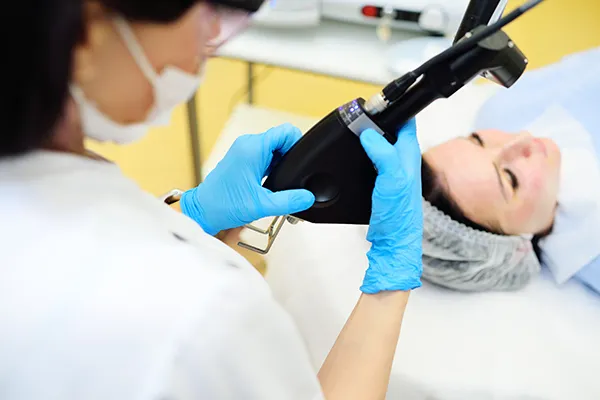
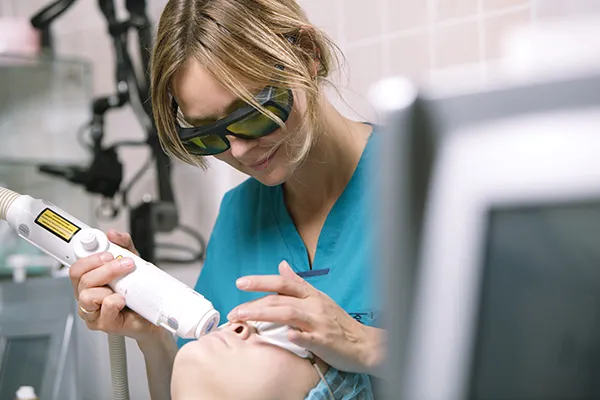
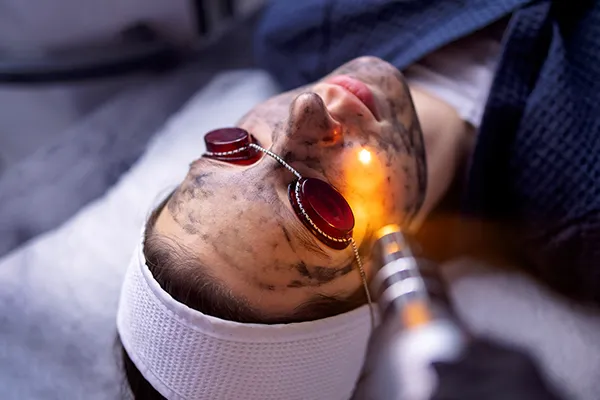
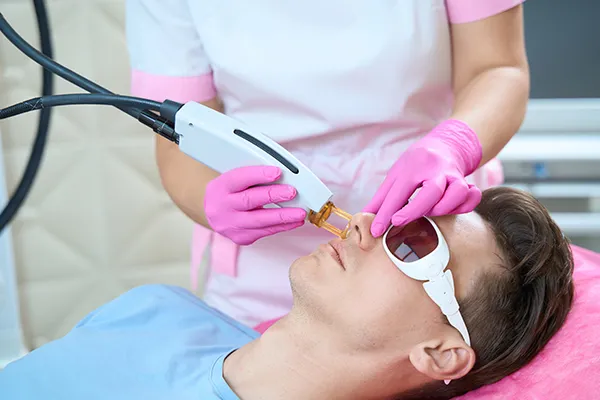
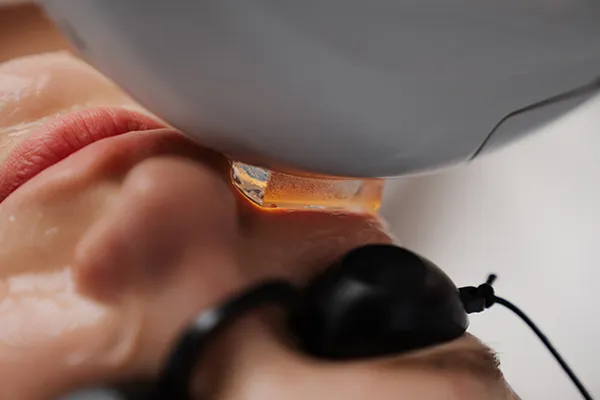
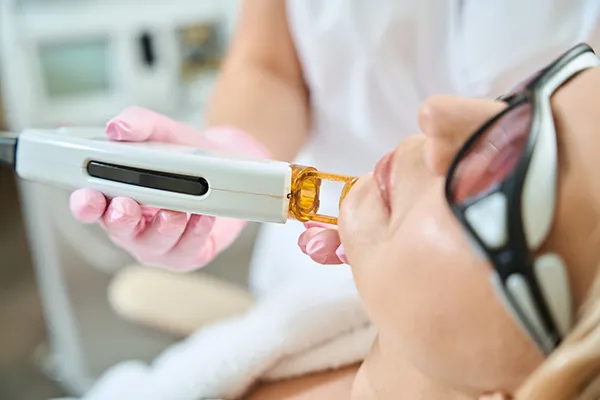
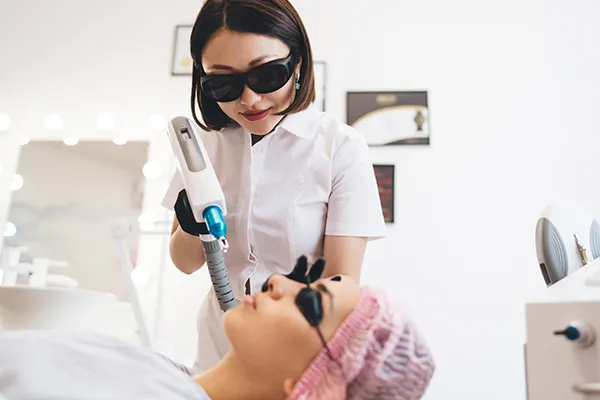
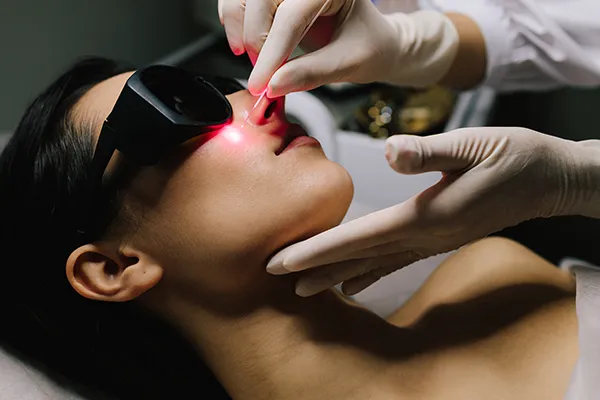
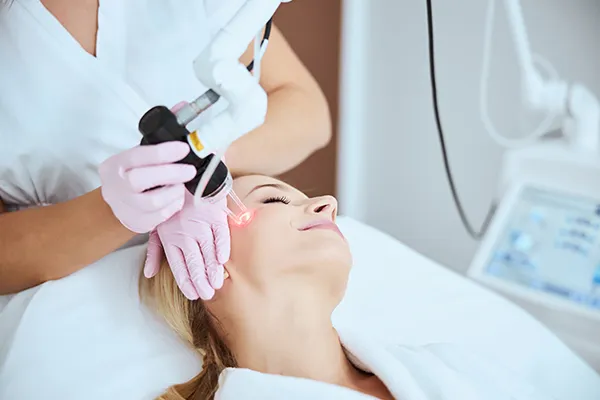
The skin is cleansed, and protective eyewear is fitted. The handpiece is passed across the pigmented areas in a set pattern, with cooling applied as needed. The sensation is a brief snap, similar to a rubber band against the skin, and topical numbing is rarely required. The whole appointment takes 15 to 30 minutes.

04

Recovery Timeline

  • First few hours: Mild redness and warmth, similar to a light sunburn. Cool compresses help if needed.
  • Day 1 to 2: Slight swelling may linger. Makeup is fine once redness settles. Heat exposure such as saunas, hot yoga, and intense workouts should wait 24 hours.
  • Day 3 onward: Skin looks normal. Melasma settings do not cause peeling or crusting, so there is nothing to hide.
  • Throughout the series: Daily broad-spectrum SPF 50 and no unprotected sun.
05

Results

Some brightening is usually visible within one to two weeks of the first visit. Melasma patches fade progressively over the series, and the clearest improvement shows four to eight weeks after the final session, once the body has cleared the last of the fragmented pigment.

How Many Sessions Does Melasma Need?

At Allure Esthetic, we recommend a starting series of three pico laser treatments spaced 2 to 4 weeks apart. That spacing gives the lymphatic system time to clear fragmented pigment before the next pass. Deep or long-standing melasma may call for additional sessions, which is confirmed at the midpoint of the series. Once the patches have faded, a single maintenance visit every 3 to 6 months, timed before and after the summer, keeps the pigment from rebuilding.

Pico Laser Cost in Seattle, WA

Pico Laser Cost in Seattle, WA

Pico Laser for Melasma & Pigment Removal in Seattle, WA at Allure Esthetic costs $600 for a single treatment or $1,600 for a series of three. Because melasma responds gradually, the three-treatment series is the usual starting point. The exact plan is confirmed at the consultation.

How to Keep Melasma Under Control Between Sessions

Laser treatment clears pigment that is already present. Skincare and sun defense stop new pigment from forming, and melasma requires both. A maintenance plan at Allure Esthetic may combine:

  • Daily protection: Tinted mineral SPF 50 with iron oxides, which blocks visible light along with UVA and UVB. Standard clear sunscreen does not block visible light.
  • Pigment control: Tranexamic acid, applied topically or taken orally under provider direction, to reduce melanocyte signaling.
  • Short brightening cycles: Hydroquinone, azelaic acid, or kojic acid for limited periods, rotated to avoid irritation.
  • Barrier support: Niacinamide and vitamin C for daily antioxidant defense and a calmer skin surface.

Patients who follow the full protocol usually hold results longer and need fewer maintenance visits.

How to Keep Melasma Under Control Between Sessions

Pico Laser vs. Q-Switched Laser vs. IPL for Melasma

Pico Laser vs. Q-Switched Laser vs. IPL for Melasma
Feature Pico Laser Q-Switched Laser IPL
Pulse duration Picoseconds Nanoseconds Milliseconds
Primary effect on pigment Pressure-based fragmentation Mixed pressure and heat Heat-based light absorption
Thermal load on skin Low Moderate Moderate to high
Suitable for Fitzpatrick IV to VI Yes, at 1064 nm Limited Generally no
Reaches dermal melasma Yes Partially No
Risk of melasma flare Low with conservative settings Moderate Elevated
Typical recovery Same day to 48 hours 2 to 5 days Several days

Why Choose Allure Esthetic for Pico Laser Treatment?

Why Choose Allure Esthetic for Pico Laser Treatment?
01

Surgeon-supervised treatments: Licensed aestheticians perform every pico laser session under the oversight of a board-certified cosmetic surgeon.

02

Medical setting: Allure Esthetic is a plastic surgery practice, which means pigment conditions are evaluated with medical judgment rather than a spa menu.

03

Experience with all skin tones: Settings are tailored to Fitzpatrick type, with conservative energy and test spots used for deeper complexions.

04

Full-service aesthetic care: Pico laser can be combined with other skin treatments, injectables, or surgical procedures in the same practice.

05

Convenient Seattle location: The office serves patients from across Seattle as well as Bellevue, Kirkland, Redmond, Tacoma, Everett, and the wider Puget Sound region.

06

Clear pricing: Session and package costs are explained at the consultation with no surprise fees.

Schedule Pico Laser Treatment for Melasma in Seattle

Melasma rarely improves on its own, and heat-based treatments can push it in the wrong direction. If you are looking for Pico Laser Treatment for Melasma Near Me Allure Esthetic offers Pico laser that treats melasma, targets pigment without the warmth that makes it spread, under the supervision of a board-certified cosmetic surgeon. Call 206-209-0988 or request a consultation online to book a pico laser melasma consultation in Seattle.

FAQs

Can pico laser make melasma worse?

Any laser can worsen melasma if energy is set too high or sun protection is skipped afterward. Pico laser carries a lower risk than heat-based devices, and experienced providers use conservative fluence and test spots to minimize that risk further.

Is pico laser good for melasma compared with hydroquinone?

Hydroquinone slows pigment production at the surface but cannot reach dermal melasma. Pico laser clears pigment at both levels. The two are often used together: the laser removes existing pigment, and the topical limits new pigment between sessions.

Can pico laser remove melasma permanently?

Pico laser can clear a significant portion of visible melasma over a series of three or more sessions. Because the condition is chronic and hormone-driven, it is managed rather than cured. Maintenance sessions and daily SPF keep results stable.

Is pico laser safe for melasma on darker skin?

The 1064 nm picosecond wavelength can be used on Fitzpatrick types IV through VI because it passes through surface melanin with minimal heat. Settings are adjusted for each patient after a skin assessment.

Does pico laser help with melasma that has returned after IPL?

Yes. Many patients seek pico laser melasma treatment after IPL caused a rebound. Because pico laser relies on pressure rather than heat, it can lighten the pigment IPL left behind without repeating the flare.

Can pico laser treat melasma during pregnancy?

No. Treatment is postponed until after pregnancy and breastfeeding, since hormones during that period keep melanocytes active and results would be short-lived.

Can pico laser be combined with tranexamic acid?

Yes. Tranexamic acid, topical or oral, is frequently paired with pico laser for melasma to reduce melanocyte signaling between sessions and lower the chance of recurrence.

When can SPF and makeup be applied after treatment?

Sunscreen goes on before leaving the office. Makeup can be applied the same day once redness settles, usually within a few hours.