Botox is one of the most widely performed minimally invasive cosmetic treatments in the United States. In 2024, the American Society of Plastic Surgeons reported 9.88 million neuromodulator injections [1], making neuromodulators the most common minimally invasive cosmetic procedure in its national statistics. This category includes Botox and other botulinum toxin products such as Dysport, Xeomin, Jeuveau, and Daxxify.
People choose Botox for different reasons. Some want to soften forehead lines, frown lines, or crow’s feet while keeping their facial expressions natural. Others may discuss botulinum toxin with a healthcare provider for medical concerns such as chronic migraine or excessive underarm sweating. The FDA has approved BOTOX Cosmetic for the temporary improvement of moderate to severe forehead lines, frown lines between the eyebrows, and crow’s feet in adults.
If you’re considering Botox in Seattle, this guide explains what you need to know before treatment, including cost, how Botox works, the procedure, recovery, results, potential risks, cosmetic and medical uses, and how to choose a provider.
Quick Answer
- At Allure Esthetic cost of Botox in Seattle is $219 for 20 units or $249 for 30 units. The amount needed varies by treatment area, muscle strength, and individual goals.
- A Botox appointment usually takes about 30–60 minutes, and most cosmetic patients can return to normal daily activities the same day, following their provider’s aftercare instructions.
- Results usually begin to appear within 3–7 days, with the full effect developing over about 10–14 days. Cosmetic Botox commonly lasts around 3–4 months, although results vary from person to person.
- Botox can be used for more than facial wrinkles. Depending on the condition and treatment plan, botulinum toxin may also be used for medical concerns such as chronic migraine and excessive underarm sweating, while some uses such as TMJ treatment are off-label.
What is Botox?
Botox is a prescription injectable made from a purified form of botulinum toxin type A. Injected in tiny, carefully measured amounts, it temporarily blocks the nerve signals that tell a muscle to contract. When that muscle relaxes, the skin resting on top of it tends to look smoother.
Why Do People in Seattle Choose Botox?
People choose Botox for different reasons. Some want to soften expression lines and maintain a natural, refreshed appearance, while others may consider botulinum toxin for medical concerns such as chronic migraine, excessive sweating, or jaw muscle tension.
For cosmetic treatment, the goal is often to soften lines rather than completely stop facial movement. Botox temporarily reduces the activity of targeted muscles, which can make certain dynamic wrinkles less noticeable. Some people also consider treatment when they first notice expression lines becoming more visible, although Botox is not a guaranteed way to prevent future wrinkles.
Convenience is another reason some people choose Botox. Cosmetic injections usually take a short time, and many patients can return to normal activities soon afterward. There is typically no need for bandages or a lengthy recovery period, although patients should follow the specific aftercare instructions provided by their injector.
Botox is also used for concerns that have nothing to do with wrinkles. Depending on the condition and the patient’s medical history, botulinum toxin may be used for chronic migraine, severe underarm sweating, and certain problems involving overactive jaw muscles, such as clenching or teeth grinding. These medical uses have different treatment goals and may have different FDA approval or evidence than cosmetic Botox.
For Seattle patients, the right treatment depends less on a specific trend and more on what they want to treat, their facial anatomy or medical condition, and whether Botox is an appropriate option for their individual situation.
2026 Botox Cost in Seattle
If you’re searching for Botox cost in Seattle, you’ll see different prices from one provider to another. That’s because Botox is usually priced by the number of units used, and the amount needed varies from person to person. The treatment area, muscle strength, injector’s experience, and whether you’re treating one area or several can all affect the final cost.
What Is the Average Botox Cost in Seattle in 2026?
Botox is commonly priced per unit or as a treatment package. The total cost can range from a few hundred dollars for a small treatment area to $600 or more when multiple areas or larger amounts are treated.
Rather than comparing only the price per unit, look at what is included in the treatment and how the provider determines the number of units you need.
At Allure Esthetic, the current Botox cost in Seattle is $219 for 20 units and $249 for 30 units ($8.30 per unit for the 30-unit option). The total cost of a Botox Seattle treatment can vary depending on the treatment area, muscle strength, and number of units needed.
The number of units can vary from person to person. Factors such as muscle strength, facial structure, the area being treated, and the result you want can all affect the amount used. Medical Botox treatments, such as those used for chronic migraines, use different doses and should not be compared with cosmetic Botox prices.
Pricing note: Botox prices can change. Check with the practice for the latest price before booking your treatment.
What Are You Usually Paying For With Botox?
A Botox treatment fee can include more than the medication itself. Depending on the provider and treatment plan, you’re paying for:
- The Botox units used
- Injector training and experience
- Assessment of facial anatomy and muscle movement
- A treatment plan based on your individual concerns
- Sterile, single-use injection supplies
- The injection procedure
- Follow-up availability
- Clinic safety standards
- Aftercare instructions
The number of units is only one part of the treatment. Two people may need different amounts of Botox for the same area because muscle strength, anatomy, and treatment goals vary. Injection placement and dosing also require clinical judgment, which is why comparing providers based only on the lowest price per unit can be misleading.
What Can Make Botox Cost More or Less?
Your final Botox cost may change based on:
- Number of units: More units generally mean a higher total price.
- Treatment area: Different muscles require different amounts of Botox.
- Number of areas treated: Treating the forehead, frown lines, and crow’s feet together costs more than treating one area.
- Individual muscle strength: Stronger muscles may require more product.
- Injector experience: Training and experience can influence a provider’s fees.
- Medical vs. cosmetic treatment: Medical indications can involve different dosing and treatment protocols.
- Follow-up or touch-up policy: Some practices include follow-up care in their treatment fee, while others may charge separately.
What is Botox Used For?
Cosmetic Botox Treatments
Botox for Forehead Wrinkles
It is one of the most requested treatments anywhere. The frontalis muscle lifts the brows, and years of that motion may etch horizontal lines. Careful dosing matters here, since too much product can leave the brows feeling heavy.
Botox for Smile Lines
“Smile lines” can refer to different types of facial lines. If the concern is dynamic lines caused by repeated muscle movement, Botox for smile lines may soften them in selected areas. However, lines caused mainly by volume loss or changes in skin structure may respond better to treatments such as dermal fillers or skin-resurfacing procedures. Your provider should first determine what is causing the line before recommending treatment.
Botox for Under-Eye Bags
It is an off-label use, meaning the FDA has not approved it for that purpose even though physicians may use it based on clinical judgment. Fine crepey lines under the eyes sometimes improve with very small doses, but true puffiness from fat pads or fluid usually needs a different approach.
Botox for Hooded Eyes
Botox for hooded eyes relies on a trick of muscle balance. Relaxing the muscles that pull the brow down may let the brow sit slightly higher, creating a subtle opening effect. Results tend to be modest, and significant skin hooding often responds better to surgery. Related to this, Botox for ptosis is a topic patients raise often, usually after an unwanted eyelid droop from a previous treatment elsewhere.
Botox for the Nose
Botox for nose treatments targets so-called bunny lines along the bridge, flaring nostrils, or a downward pulling nasal tip. These are off-label refinements, not a replacement for rhinoplasty.
Botox for Nasolabial Folds
It is more nuanced. Those folds run from the nose to the corners of the mouth, and they usually reflect volume loss rather than muscle pull. Dermal fillers often suit that area better, and heavy-handed Botox near the mouth may affect smiling. An honest injector will say so.
Medical Botox Treatments
Botox for Migraines
Botox for migraines received FDA approval [2] in 2010 for adults with chronic migraine, defined as headaches on 15 or more days each month for longer than three months. Injections are placed across the forehead, temples, back of the head, and neck, with treatments repeated about every 12 weeks [3].
Botox for Headaches
Botox for headaches in general is a different story. Occasional tension headaches and episodic migraine are not part of that FDA approval [4], so anyone hoping for relief from ordinary headaches deserves a frank conversation about what the evidence does and does not support.
Botox for TMJ, Jaw Pain, Teeth Grinding
Botox for TMJ, Botox for jaw pain, and Botox for teeth grinding all relate to the masseter muscle. Injections into that muscle may reduce clenching force, which some patients say eases morning soreness and jaw tightness. Many also notice a slimmer lower face over time. This use is off-label, and results in the jaw area often last a bit longer than facial cosmetic treatments.
Botox for Hyperhidrosis
Botox for hyperhidrosis has solid FDA backing for severe underarm sweating. The injections block signals to sweat glands, and improvement often shows within one to two weeks. Palms and soles are treated off-label with a similar approach, usually with numbing first, since those areas are far more sensitive.
Botox for Hair: Clearing Up the Confusion
“Hair Botox” sold in salons is not the same as botulinum toxin injections. It is generally a conditioning treatment marketed to smooth and improve the appearance of hair. Actual botulinum toxin injections into the scalp are an emerging area of research, not an established treatment for hair loss.
Who is a Good Candidate for Botox?
Botox may be an option for adults who want to reduce certain facial lines or have a medical condition that can be treated with Botox. A consultation is needed to make sure the treatment is safe and right for you.
You may be a good candidate if you:
- Have facial lines that become more noticeable when you smile, frown, or make other facial expressions
- Want to make these lines less noticeable without making your face look completely smooth or frozen
- Have a medical condition that may benefit from Botox
- Understand that Botox results are temporary and will need to be repeated over time
- Are healthy enough for treatment based on your medical history and current medications
Who Should Avoid Botox?
You may avoid Botox if you:
- Botox is generally avoided during pregnancy and breastfeeding because there is not enough evidence to establish its safety in these situations. Discuss your individual circumstances with your healthcare provider.
- People with neuromuscular disorders, such as myasthenia gravis or ALS, may not be suitable candidates.
- Treatment is usually postponed until the skin has fully healed.
- Anyone with a known allergy to Botox or other botulinum toxin products should discuss alternative options.
- Some antibiotics, muscle relaxants, and other medications may affect treatment and should be reviewed during the consultation.
During your consultation, tell your provider about your health history, medications, supplements, and any past injectable treatments.
A Step-by-Step Process for Botox Treatment
Step 1: Medical History Review
Before treatment, your provider reviews your medical history to make sure Botox is a safe option for you.
- Current medications and supplements
- Allergies or previous reactions
- Past Botox or injectable treatments
- Medical conditions that may affect treatment
Step 2: Facial Assessment
Your provider evaluates how your facial muscles move and identifies the areas contributing to visible lines.
- Forehead lines
- Frown lines between the eyebrows
- Crow’s feet around the eyes
- Muscle movement and facial balance
Step 3: Injection Mapping
Before injecting, your provider may mark specific areas on the face to guide accurate placement.
- Precise injection points
- Balanced results between both sides of the face
- Treating the muscles responsible for targeted wrinkles
Step 4: Botox Injection
A very fine needle is used to place small amounts of Botox into selected muscles.
- Most patients feel brief pinching or pressure
- The injections usually take about 10 to 15 minutes
- A cold compress may be used to improve comfort
Step 5: Immediate Aftercare
Your provider will give you instructions to protect the treated areas and support your results.
- Stay upright for several hours.
- Avoid rubbing or massaging the injection sites
- Avoid strenuous exercise for the rest of the day
- Follow any specific instructions provided by your injector
This step-by-step approach allows Botox treatment to be tailored to your facial anatomy, muscle movement, and aesthetic goals.
Botox Recovery Timeline (Day-by-Day)
First Few Hours
Immediately after Botox, you may notice:
- Minor tenderness at injection points
- Small bumps that usually fade quickly
- Minimal disruption to your daily routine
First Day
Most patients return to their normal activities after treatment.
- Mild sensitivity in treated areas
- A slight headache or tight feeling
- Temporary redness near injection sites
Days 2–3
Early changes may begin as the treated muscles start to relax.
- Less movement in targeted areas
- A gradual softening of expression lines
- Subtle changes rather than dramatic results
Days 4–7
Botox results become more noticeable as muscle activity continues to decrease.
- Softer forehead lines
- Reduced appearance of frown lines
- A more refreshed look while maintaining natural expressions
Days 10–14
Full results are typically visible during this time.
- How evenly the Botox has taken effect
- Whether any small adjustments are needed
- How your final results match your treatment goals
Around 3 Months
Many patients schedule maintenance treatments around this time to help maintain their refreshed appearance. The exact duration can vary depending on the treatment area, dosage, and individual response.
Seattle Lifestyle and Botox Recovery Tips
Seattle has an active lifestyle, from hot yoga and fitness classes to running trails and cycling routes. Planning your Botox appointment around your routine can make recovery easier.
Keep these tips in mind:
- Give yourself time before intense workouts.
- Schedule Botox before important events.
- Avoid pressure on treated areas.
- Plan your appointment around your routine.
Botox Before and After Results
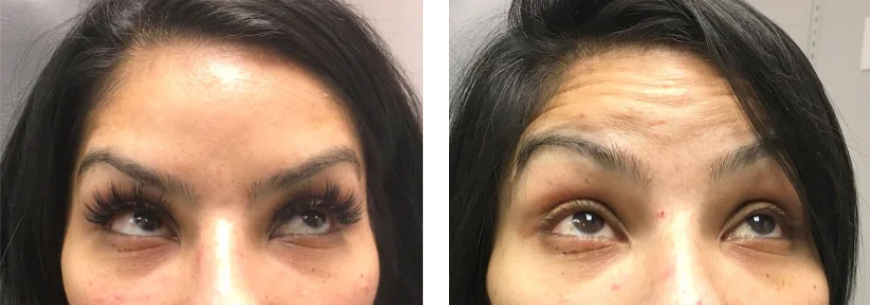
View before-and-after photos carefully. The most useful galleries show the same lighting, the same angles, and faces both at rest and in motion. Results in a real gallery vary because faces vary.
When Will I See Botox Results?
Results typically begin becoming noticeable within several days. Many people see clearer improvement by 3–7 days, while the final effect can continue developing over the following days.
How Long Does Botox Last?
At Allure Esthetic, many cosmetic Botox patients choose maintenance treatments approximately every 3 to 4 months. However, timing varies depending on the treatment area, dosage, muscle activity, and individual response.
| Treatment area | Typical Duration |
| Forehead lines | 3 to 4 months |
| Frown lines between brows | 3 to 4 months |
| Crows feet | 3 to 4 months |
| Masseter (jaw, clenching) | 3 to 6 months |
| Underarm sweating | 4 to 10 months |
| Chronic migraine protocol | Repeated about every 12 weeks |
These are general ranges, not guarantees. Duration varies by treatment area, product, dosage, muscle activity and individual response.
Are Botox Procedures Safe?
In general, yes, Botox is considered safe, as Botox has an established safety profile when performed by a qualified injector who understands facial anatomy and follows proper treatment guidelines, but like any medical treatment, it carries potential risks and side effects. The right provider, correct dosing, and personalized treatment plan all play an important role in achieving safe, natural-looking results.
- Injector training and experience
- Understanding facial muscles and movement patterns
- Proper product handling and injection technique
- Reviewing medical history and medications
- Following aftercare instructions and follow-up recommendations
Does Botox Look Natural?
The frozen look people fear usually comes from too much product in the wrong places, not from Botox itself. Baby Botox uses smaller amounts spread across more points, aiming to soften movement without erasing it. Micro Botox places very diluted product more superficially, often to refine skin texture and pore appearance.
Natural results depend heavily on dosing judgment and respect for how muscles work together. Relaxing one muscle without accounting for its neighbors is how odd brow shapes happen. Dr. Sajan’s approach leans conservative for this reason, favoring results where patients still look like themselves.
What are the Risks and Side Effects of Botox Seattle?
Every treatment has potential risks. You should understand what can happen:
- Bruising or small swelling at injection sites
- Mild redness or tenderness
- Temporary headache, especially after a first treatment
- Slight asymmetry or uneven results
- Temporary drooping of the eyelid or brow in some cases
- Rare allergic reactions
Choose an experienced injector, share your complete medical history, follow aftercare instructions, and seek medical attention [5] right away if you experience unusual symptoms such as trouble swallowing, breathing difficulties, or spreading weakness.
What are the Common Botox Mistakes First-Time Patients Make?
Chasing the lowest price often costs more later, especially if a correction becomes necessary.
- Avoid rubbing or putting pressure on the treated areas and follow the specific aftercare instructions provided by your injector.
- Expecting results the next morning leads to unnecessary worry
- Skipping the two-week check-in removes the best chance for a small refinement.
- Comparing unit prices between Botox, Dysport, and Xeomin creates confusion.
Botox vs Dysport vs Xeomin
All three use botulinum toxin type A and similarly relax muscles, but they differ in formulation.
| Aspect | Botox | Dysport | Xeomin |
| Since | 2002 | 2009 | 2011 |
| Active ingredient | OnabotulinumtoxinA | AbobotulinumtoxinA | IncobotulinumtoxinA |
| FDA-approved cosmetic uses | Specific facial lines | Specific facial lines | Specific facial lines |
| Units interchangeable? | No | No | No |
| Onset | Typically several days | Typically several days | Typically several days |
| Duration | Often ~3–4 months for cosmetic treatment | Often ~3–4 months | Often ~3–4 months |
| Formulation | Contains accessory proteins | Contains accessory proteins | Purified formulation without complexing proteins |
What Happens If Botox Goes Wrong?
When Botox is not placed correctly, or too much product is used, the results may not look or feel as expected. Some patients may notice:
- A heavy or tight feeling in the forehead
- Uneven eyebrows
- A temporary drooping eyelid or brow
- Changes in smile balance
- Reduced facial movement that feels unnatural
In many cases, these effects improve as the product naturally wears off. An experienced injector may also recommend ways to help balance the results while you wait for the effects to fade.
Choose the Best Botox Provider in Seattle
If you’re searching for “Best Botox Seattle” or looking for a trusted Botox provider, the most important factors go beyond price or promotions.
1. Credentials and Training
Botox is not just about placing injections; it requires knowing how different muscles affect your expressions and overall facial balance.
2. Experience With Your Treatment Goals
Treating forehead lines, crow’s feet, frown lines, or masseter muscles requires different techniques and planning.
3. Real Patient Results and Reviews
Look for natural-looking results across different facial features, not just dramatic changes.
4. Personalized Consultation and Clear Communication
Clear pricing, honest recommendations, and proper follow-up care are all signs of a practice you can trust.
Why Injector Experience Matters
Botox injections are relatively quick, but the treatment requires an understanding of facial anatomy, muscle movement, dosing, and how different muscles interact. The goal is not simply to reduce wrinkles. Treatment needs to be planned around the patient’s anatomy and the area being treated so that facial movement and expression remain balanced.
Experience can also be important when Botox is used for concerns such as jaw tension, teeth grinding, or excessive sweating, because these treatments involve different muscles and treatment goals than cosmetic injections. A qualified provider should be able to explain the expected benefits, limitations, possible side effects, and alternatives before treatment.
When choosing a Botox provider in Seattle, patients may want to look beyond price and consider the provider’s medical credentials, training, experience with the treatment area, facility standards, before-and-after results, and approach to consultation and follow-up care.
About Dr. Javad Sajan
Dr. Javad Sajan is the founder of Allure Esthetic in Seattle. Information about his professional background, training, and credentials is publicly available through the American Board of Cosmetic Surgery.
Botox treatments at Allure Esthetic are performed in a JCAHO-accredited surgical facility [6]. This accreditation is relevant to the facility’s standards for patient care and safety, although accreditation itself does not determine whether Botox is appropriate for a particular patient.
Dr. Sajan’s approach to injectables is based on assessing the individual’s facial anatomy and muscle movement rather than using the same treatment plan for everyone. Treatment recommendations can therefore vary according to the patient’s goals, anatomy, and the area being treated.
Patients can also review first-hand experiences independently. Reviews about consultations and treatments are available through platforms such as RealSelf and Google. These reviews represent individual patient experiences and should not be interpreted as a guarantee of a particular result.
Allure Esthetic: Real Patient Experience from Botox Treatment
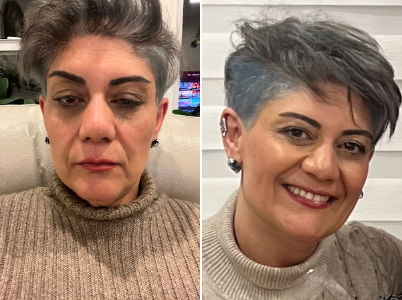
A review left by a patient named Mary shared that after getting Botox from another provider, they developed a drooping eyelid, also called ptosis. This is a known but uncommon side effect of Botox. They later visited Allure Esthetic for an evaluation and said they felt reassured by the care they received. Every patient is different, but this experience shows why it is important to choose an experienced injector who understands facial anatomy. Continue reading by clicking here…
What Patients Say About Botox at Allure Esthetics
One glowing review rarely tells the full story. By reading through the clinic’s Google reviews, a few patterns repeat often enough to be worth pointing out.
Honest advice, even when it means waiting
A patient shared that Dr. Sajan advised delaying a procedure because they were not the right candidate at the time, an experience they felt reflected an honest, patient-first approach (review).
Results that stay on the natural side
A long-term Botox patient described returning roughly every six months and appreciated that treatments looked natural rather than overdone (review).
Botox for jaw tension
A patient treated for jaw tension mentioned professional care, thorough explanations, and a welcoming clinic environment, adding that they felt comfortable throughout the appointment and planned to return (review).
Comfortable experience
Several patients noted that staff answered questions fully and helped them feel at ease during treatment (review).
Patterns across multiple reviews say more than any single testimonial.
Common Questions We Hear During Botox Consultations
Patients considering the best Botox in Seattle tend to raise the same handful of concerns.
- Will the result still look like them?
- How many units does a first treatment usually need?
- Will coworkers notice?
- Is it fine to head straight back to the office?
- What happens if the result feels wrong?
- Can Botox actually prevent wrinkles from forming?
Botox Trends in 2026
- Baby Botox uses smaller doses to soften lines while keeping facial expressions natural.
- Preventative Botox is gaining popularity among younger patients looking to address early signs of aging.
- Micro Botox is being used to improve the look of skin texture and pores.
- Personalized dosing is replacing standard formulas, with treatment based on each person’s facial muscles and goals.
- Combination treatments pair Botox with fillers or skin treatments for more complete results.
Conclusion
Good Botox results should look natural. The goal is not to make your face look frozen or different. Getting the right result depends on your facial features, how your muscles move, the areas being treated, and the amount of Botox used.
If you are considering Botox in Seattle, a consultation can help you understand whether it is right for you, which areas may be treated, how much may be needed, and what kind of results you can expect. You can also ask about other treatment options if Botox is not the best choice for your concern.
Considering Botox?
Learn more about Botox or schedule a consultation with Allure Esthetic to discuss your goals with Dr. Javad Sajan and the injectable team.
Phone: (206) 209-0988
FAQs
How much does Botox cost in Seattle?
City averages often land between $12 and $20 per unit. At Allure Esthetic, treatment starts at $219 for 20 units and $249 for 30 units, which works out to roughly $8.30 per unit.
Is Botox FDA-approved for TMJ?
No. Botox is not FDA-approved specifically for TMJ disorders or masseter treatment. Some providers use botulinum toxin off-label to reduce activity in the muscles involved in clenching, but the treatment should be discussed with a qualified healthcare professional.
How many units of Botox does a first treatment need?
It depends on the area and muscle strength. Frown lines commonly use around 20 units, forehead lines often use fewer, and crow’s feet may use about 5 to 15 units total. A consultation gives a specific number.
Does Botox hurt?
Most patients describe brief pinpricks. Needles are very fine, and cold compresses may help with comfort.
How long does Botox last?
Cosmetic results commonly last 3 to 4 months. Jaw treatments may last a bit longer, and underarm sweating treatments often last several months more.
When do Botox results show up?
Early changes often appear within 3 to 7 days, with full results generally around 10 to 14 days.
Does Botox help TMJ and jaw pain?
Masseter injections may reduce clenching force, which some patients say eases jaw tightness and soreness. This use is off-label.
Can Botox help teeth grinding?
Many patients report less clenching after masseter treatment, though it manages the muscle activity rather than curing the underlying habit. A dental evaluation is still worthwhile.
Is Botox safe?
It has a long safety record when administered properly by trained providers. Risks exist, including bruising, headache, and temporary droop, so a full medical history review matters.
Is it fine to work after Botox?
Most people return to normal activities the same day, following aftercare guidance to stay upright and avoid pressure on treated areas.
Can makeup go on after Botox?
Many providers suggest waiting several hours and applying gently, since rubbing the area soon after injections is discouraged.
Can Botox prevent wrinkles?
Reducing repeated muscle movement may help lines form more slowly, which is the reasoning behind preventative treatment, though results vary from person to person.
Is Botox better than fillers?
They solve different problems. Botox relaxes muscles that create movement lines. Fillers restore volume. Some concerns, like nasolabial folds, often respond better to filler.
Can Botox lift hooded eyes?
Relaxing muscles that pull the brow down may create a subtle lift. Significant skin hooding usually needs a surgical approach.
Does Botox work for excessive sweating?
Yes, for severe underarm sweating, which carries FDA approval. Hands and feet are treated off-label with similar techniques and often with numbing first.
What happens when Botox wears off?
Muscle movement gradually returns, and lines slowly look the way they did before. There is no worsening effect from stopping.
How often should Botox be repeated?
Many cosmetic patients return every 3 to 4 months. Migraine protocols follow a roughly 12-week schedule.
Can Botox be combined with other treatments?
Often yes. Plans that pair neuromodulators with fillers, lasers, or skincare are common, and sequencing gets decided during consultation.
Why do some people look frozen after Botox?
Usually because of excessive dosing or placement that ignores muscle balance, not because of the product itself.
Is there an age limit for Botox?
Treatment is intended for adults 18 and older. Many patients begin in their late twenties or early thirties, though timing is a personal decision.
Do Botox, Dysport, and Xeomin cost the same per unit?
Prices per unit differ, and units are not equivalent between brands, so total treatment cost is the more useful comparison.
What should be avoided right after Botox?
Common advice includes skipping strenuous exercise, saunas, and facials for about 24 hours, avoiding rubbing the area, and staying upright for several hours.
Can Botox help with hair?
Salon hair botox treatments contain no botulinum toxin and act as conditioning masks. Actual scalp injections are an early research area rather than an established solution.
How does someone choose the best Botox provider in Seattle?
Look at credentials, years of injecting experience, honest before-and-after photos, consistent long-term reviews, a thorough consultation, and clear pricing.
Sources
American Society of Plastic Surgeons – 2024 Plastic Surgery Statistics Report (source for the 9.88M neuromodulator figure)
https://www.plasticsurgery.org/documents/news/statistics/2024/plastic-surgery-statistics-report-2024.pdf
U.S. FDA – Clinical Review, BLA 103000/S-5215 (official record of the 2010 chronic migraine approval)
https://www.fda.gov/media/124201/download
BOTOX® Chronic Migraine – official product site (current FDA-approved indication language, dosing schedule)
https://www.botoxchronicmigraine.com/
American Migraine Foundation – Botox for Migraine (patient-friendly explainer of the FDA indication)
https://americanmigrainefoundation.org/resource-library/botox-for-migraine/
CDC – Botulinum Toxin Injection Safety
https://www.cdc.gov/botulism/prevention/botulinum-toxin-injections.html
The Joint Commission – official site (for accreditation terminology; supersedes the older “JCAHO” name used in the article)
https://www.jointcommission.org
Related blogs