Facial aging happens at more than one level. Skin loosens, but the muscle and connective tissue underneath loosen too, and folds around the mouth and jaw deepen long before most patients expect them to. A traditional facelift often tightens only the surface, leaving results that look pulled rather than rested, or that fade within a few years.
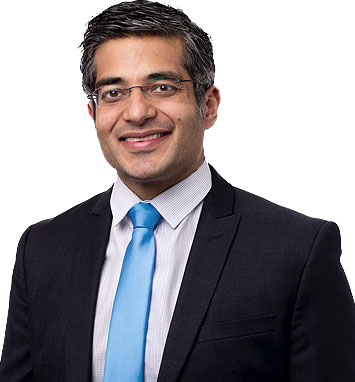
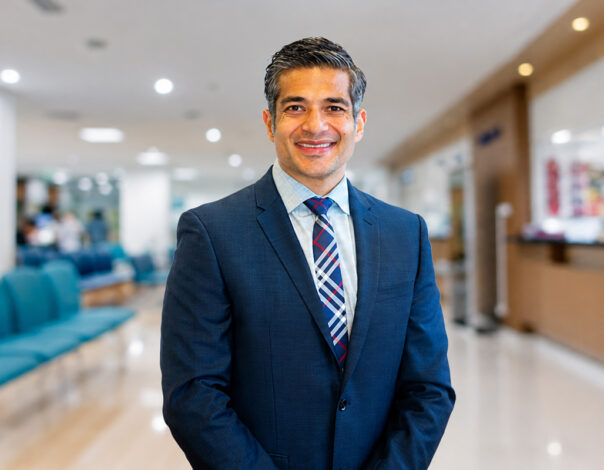
Dr. Javad Sajan of Allure Esthetic is recognized as one of the best facelift surgeons in the U.S. With over 1,100 reviews, he has been featured in multiple media outlets such as Seattle Met and Seattle Mag. Dr. Sajan, in collaboration with other surgeons, created a new technique in facelift surgery named Jasan Lift, a multi-plane approach built on his experience across thousands of facelift procedures.
What Makes the Jasan Lift Different
The Jasan Lift treats three separate tissue planes in one procedure, rather than the one or two levels most facelift methods address:
- Subperiosteal plane: the layer closest to the bone, released at the mandible and maxilla so the face lifts as one connected structure instead of skin and muscle moving separately
- Deep plane: the muscle and connective tissue layer that gives the face its underlying structural support
- Subcutaneous plane: the layer just beneath the skin, refined last for a smooth, natural surface
Working across all three lets the surgical team correct sagging where it starts, instead of stretching skin to compensate for changes happening underneath it.
Hidden Incisions and Natural Movement
Scarring is one of the biggest concerns patients raise before a facelift procedure. The Jasan Lift addresses this with incisions placed inside the mouth and along the posterior scalp, avoiding the visible lines in front of the ears that older techniques rely on. Patients with a significant amount of loose skin may still need a small external incision, since excess skin sometimes has to be trimmed directly, but for many candidates the scarring stays out of sight. The result is a face that moves naturally, without the tight, wind-swept look associated with surface-only lifts.
Benefits of the Jasan Lift
Patients considering the technique tend to ask what sets it apart from a standard facelift. A few advantages stand out:
- Minimal visible scarring for well-suited candidates, since incisions sit inside the mouth and along the posterior scalp
- Correction across three tissue levels in a single procedure, rather than several separate treatments
- Natural, unified results instead of the tight, pulled look linked to surface-only lifts
- Rejuvenation that tends to hold up longer, since the technique corrects the structure causing the sagging rather than just the skin covering it
Dr. Javad Sajan’s Role in Developing the Technique
Dr. Sajan, who practices at Allure Esthetic in Seattle, focuses exclusively on cosmetic and reconstructive surgery of the face and body. A certified surgeon, he has built his facelift volume over thousands of procedures, giving him direct insight into where conventional methods fall short and where the aging face actually needs support. That volume, combined with his artistic judgment and hands-on patient care, shaped how the Jasan Lift treats the aging face as a single structure rather than a set of separate problems:
- Focuses exclusively on cosmetic and reconstructive surgery of the face and body
- Recognized as a top plastic surgeon by Seattle Magazine and Seattle Met Magazine
- Lectures nationally on advanced facelift and surgical technique
- Remains available to his surgical patients 24/7 after their procedure
Why Case Volume Matters in a Facelift
A technique is only as strong as the experience behind it. Dr. Sajan’s facelift volume, built over thousands of procedures, means the Jasan Lift was shaped by patterns seen across a wide range of facial anatomy, not a handful of cases. That case history is part of why the approach can treat the subperiosteal, deep, and subcutaneous planes together without over-tightening any single layer. Patients researching a facelift in Seattle can review technique details and other options, including mini facelift and neck lift procedures for patients who need a more limited correction.
Ready to Explore the Jasan Lift?
Patients ready to find out whether the Jasan Lift fits their goals can schedule a consultation with Dr. Sajan at Allure Esthetic. The practice offers virtual consultations for patients outside the Seattle area and in-person visits at its Seattle office for a full evaluation of facial anatomy and candidacy. Contact Allure Esthetic to book a facelift consultation and get a personalized recovery timeline and cost estimate.
FAQs
How long does it take to recover from a facelift?
Most patients take about two to three weeks off from work and social activities. Swelling and bruising improve steadily during that window, though subtle refinement of the final result can continue for several months as tissue settles.
At what age should someone consider a facelift?
There is no fixed age. Candidacy depends on skin quality, bone structure, and how much sagging has developed rather than a specific birthday, which is why an in-person or virtual evaluation matters more than a general age guideline.
How long do facelift results typically last?
A well-performed facelift that addresses deeper facial layers, not just skin, tends to hold its results for roughly ten to fifteen years. Sun exposure, weight changes, and genetics all influence how long that rejuvenation lasts.
Is facelift surgery painful?
Discomfort is typically described as tightness and pressure rather than sharp pain, and it is managed with prescribed medication during the first several days. Most patients find the sensation more manageable than they expected going in.
Can a facelift be combined with other procedures?
Yes. Facelifts are frequently paired with eyelid surgery, a brow lift, or skin resurfacing during the same surgical visit, which can shorten total recovery time compared to spacing procedures out over separate appointments.
Related blogs