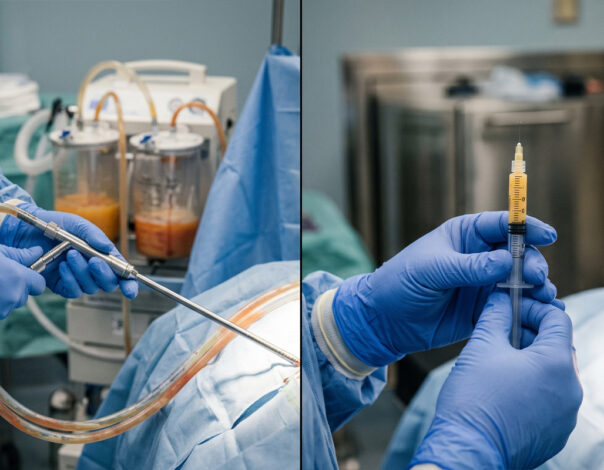
Fat transfer involves harvesting fat from a patient via liposuction and then reinjecting it. alloClae® uses donor adipose tissue, so it doesn’t require fat harvesting. When choosing between alloClae® and fat transfer, Seattle patients should consider the required volume, available donor fat, the area being treated, the surgeon’s preference, and the recovery profile. This blog explains the basics of AlloClae and how it differs from fat transfer.
Difference Between alloClae® and Fat Transfer
Want to understand how alloClae® and fat transfer differ? Here’s a quick comparison between the two procedures:
| Factor | alloClae® | Fat Transfer |
| Tissue source | Donor-derived adipose tissue | Patient’s own fat |
| Fat harvesting | No | Yes |
| Liposuction | Not required for harvesting | Required |
| Surgical procedure | No surgical fat harvesting | Surgical |
| Donor site | No | Yes |
| Recovery | Generally shorter | Generally longer |
| Available volume | Depends on treatment plan/product availability | Depends partly on available donor fat |
| Best suited to | Targeted volume/contour concerns | Patients wanting larger-volume augmentation and who have sufficient donor fat |
Both treatments add volume and shape to the body, but they work differently. One uses donor-derived tissue, while the other uses the patient’s own fat. These differences affect the procedure, candidacy, and recovery.
How alloClae® Works?
alloClae® is derived from donor adipose tissue and is not a standard hyaluronic acid (HA) filler. As it uses donor tissue, you don’t need to harvest fat from another area of your body. A board-certified surgeon performs this procedure to address volume and contour concerns. AlloClae body contouring may suit patients seeking targeted improvements without a separate fat-harvesting step.
How Traditional Fat Transfer Works?
Fat transfer involves three main stages. The procedure starts with liposuction for harvesting fat from a donor site, commonly the abdomen or flanks. Next, the fat is processed and prepared for reinjection, then placed in the target area to add volume or improve contour. Compared with a non-surgical fat transfer alternative, traditional fat transfer involves surgery, a donor site, and additional recovery considerations.
alloClae® vs Fat Transfer: What Makes the Difference in Your Choice?
The following points of comparison will help you choose between fat transfer and AlloClae to meet your body contouring goals.
- Sufficient donor fat: Fat transfer requires sufficient fat to harvest. Patients with low body fat are not eligible for traditional fat transfer.
- Desired volume: The treatment area, anatomical and surgical requirements play a vital role in targeting specific contour improvements or substantial volume enhancement.
- Liposuction or surgical preferences: alloClae® is a non-surgical injectable body-contouring solution, while liposuction is a surgical fat transfer.
- Downtime considerations: alloClae® has less downtime than traditional fat transfer procedures.
Alloclae Vs Fat Transfer for Hip Dips and Body Contouring
Fat transfer suits larger volume goals, while alloClae® targets contour refinement. Here are the major differences between the two procedures.
| Point of Difference | Fat Transfer | AlloClae |
| Primary purpose | Adds volume to the hip dip area | Targeted contour improvement |
| Best suited for | Patients seeking substantial volume enhancement | Patients seeking a softer appearance with refined contour rather than large volume gain |
| Source material | Patient’s own donor fat | Allograft-based product (does not require patient donor fat) |
| Donor fat requirement | Requires sufficient donor fat available | Not dependent on available donor fat |
| Volume capacity | Higher volume potential when donor fat is adequate | Lower volume, focused on contour rather than bulk |
| Treatment goal alignment | Volume addition to fill indentations | Complementing natural proportions through targeted refinement |
| Patient selection basis | Individual anatomy, desired results, clinical suitability | Individual anatomy, desired results, clinical suitability |
Recovery: AlloClae vs Fat Transfer
Recovery after alloClae® is typically less intensive than fat transfer because it doesn’t require a liposuction donor site. However, swelling, bruising, and activity restrictions still occur and may vary by treatment area and individual healing. Recovery from fat transfer involves healing at the donor and treated sites, with swelling and bruising depending on the procedure’s complexity and the amount of fat transferred. It is advisable to seek personalized guidance from the provider before choosing a suitable procedure
How Long Do AlloClae and Fat Transfer Results Last?
With alloClae®, the treated area may change as the tissue integrates and remodels over time. Results vary by patient, treatment area, and amount placed.
With fat transfer, the body reabsorbs some of the transferred fat, while the remaining fat may provide long-term volume. Final results take time to settle as healing progresses. Neither treatment guarantees a specific duration of results.
Who May Be a Candidate for AlloClae or Fat Transfer?
AlloClae candidacy may be considered for patients seeking targeted volume or contour improvements who prefer not to harvest their own fat or have limited donor fat available. Suitability also depends on the treatment area, medical history, and the provider’s assessment.
Fat transfer candidacy depends on having enough donor fat, being comfortable with liposuction and surgery, and having goals that fat grafting can appropriately address. A qualified practitioner must evaluate each patient to determine which option, if either, is appropriate.
What Should Seattle Patients Consider Before Choosing?
Before choosing between alloClae® and fat transfer, consider these questions:
- How much volume do I want to add?
- Do I have sufficient donor fat?
- Do I want to avoid liposuction?
- How much recovery time can I manage?
- Which treatment best suits my anatomy and contouring goals?
Discussing these factors with a qualified provider can help clarify the differences between the two options. According to the FDA, patients should also ask about product information, potential risks, expected outcomes, and the provider’s experience with the proposed treatment.
Schedule An Appointment For Alloclae® In Seattle
Anatomy, donor fat availability, desired volume, treatment area, surgical preferences, and recovery needs make the alloClae® treatment plan unique. If you want expert guidance before undergoing AlloClae in Seattle, Allure Esthetic is a trusted choice. Board-certified cosmetic surgeon Dr. Javad Sajan will discuss your surgical and non-surgical body contouring goals before determining your candidacy. Not sure how to align your surgical goals through alloClae®? Schedule an appointment with our internationally recognized surgeon to get practical advice.
FAQs
Is alloClae® the Same as Fat Transfer?
No. alloClae® uses donor-derived adipose tissue, while fat transfer uses your own fat harvested through liposuction.
Does alloClae® Require Liposuction?
No. alloClae® doesn’t require harvesting your own fat, so you don’t need liposuction for that purpose.
Is AlloClae a Good Alternative to Fat Transfer?
alloClae® may suit some patients, especially those seeking targeted contour improvements or wanting to avoid fat harvesting. However, it is not interchangeable with surgical fat transfer, and suitability depends on individual goals and clinical assessment.
Can I Get alloClae® if I Don’t Have Enough Body Fat?
Limited donor fat can make traditional fat grafting difficult. Since alloClae® uses donor-derived tissue, it may be an option for appropriately selected patients.
Which Has More Downtime: alloClae® or Fat Transfer?
Fat transfer generally involves additional recovery because it includes a liposuction donor site. alloClae® avoids that fat-harvesting step, although recovery varies by patient and treatment area.
Which Lasts Longer: alloClae® or Fat Transfer?
The treatments behave differently. Some transferred fat may be reabsorbed, while surviving fat can provide long-term volume. alloClae® results may also change as the tissue remodels. There is no universal answer for every patient.
Can alloClae® Be Used for Hip Dips?
It may be considered for selected patients depending on their anatomy, contouring goals, and a physician’s assessment.
How Do I Know Whether alloClae® or Fat Transfer Is Right for Me?
The key factors include your anatomy, available donor fat, desired volume, treatment area, comfort with surgery, and recovery preferences. A qualified physician can help you compare options and determine which approach is right for you.
Related blogs