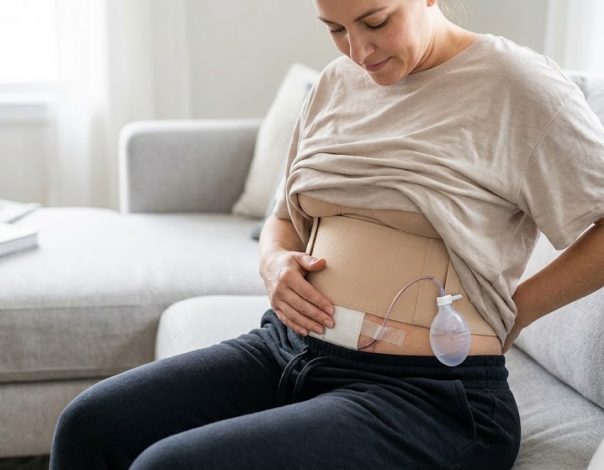
Still seeing swelling weeks after surgery? Feeling fluid shifting under the skin instead of seeing the abdomen settle the way it should? For many patients, that fullness raises one urgent question, how to get rid of seroma after tummy tuck. A seroma is one of the most common healing issues after abdominoplasty, and while some cases improve on their own, others need treatment to prevent longer recovery, discomfort, and contour changes. At Allure Esthetic, Dr. Javad Sajan, a renowned plastic surgeon with over a decade of experience, helps patients through recovery with close monitoring and personalized aftercare.
What Is a Seroma After Tummy Tuck?
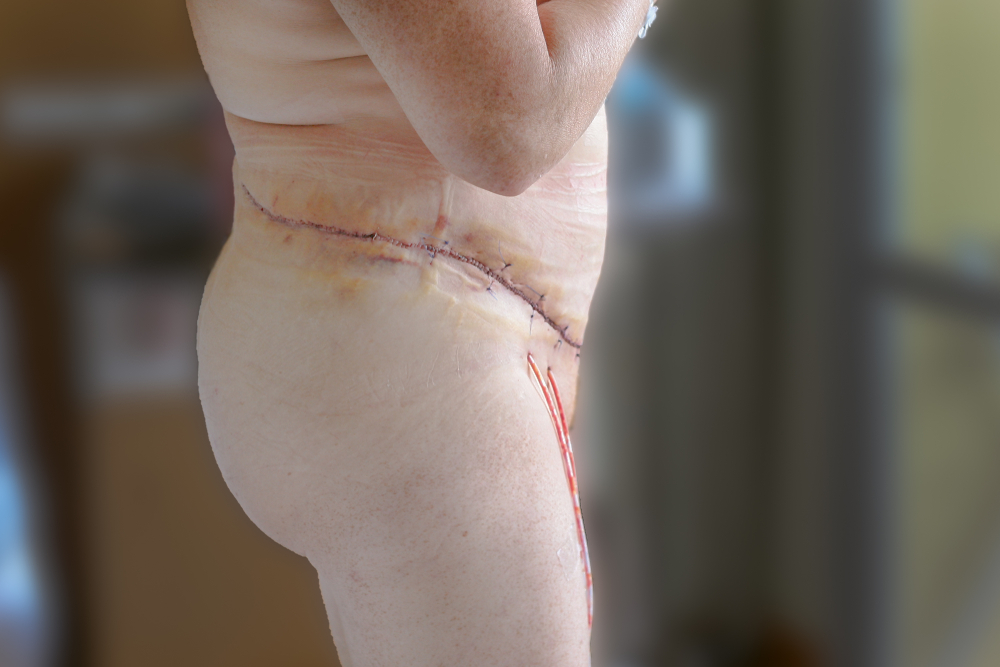
A seroma is a pocket of clear, straw-colored fluid that collects under the skin after surgery. It develops when tissue is lifted or removed and the body fills that space with inflammatory fluid during healing. After a tummy tuck, this can happen because the procedure creates a large internal space and temporarily disrupts small lymphatic channels. Seroma formation is widely recognized as the most common complication after abdominoplasty, with published reports showing rates ranging from about 1% to 38%.
This does not mean every area of swelling is a seroma. Normal post-op swelling is expected. A seroma usually feels more localized and fluid-like.
Signs You May Have a Seroma
Patients often notice symptoms that feel different from normal post-surgical swelling. Common signs include:
- Swelling that does not go down as expected
- A soft bulge or lump under the skin
- A sloshing, shifting, or “waterbed” feeling
- Clear or yellowish drainage from the incision or drain site
- Pressure, tightness, or mild discomfort in one area
A seroma may be small and barely noticeable, or it may become large enough to affect comfort and healing. Persistent swelling after surgery should not be dismissed, especially if the area seems to refill or increase in size.
Why Does Seroma Happens After Tummy Tuck?
Seroma develops because the body is healing in a space where tissue was separated. Several factors can contribute:
Tissue separation
A tummy tuck involves lifting abdominal skin and fat from the underlying tissue. That creates what surgeons call “dead space,” where fluid can collect.
Lymphatic disruption
Small lymphatic vessels are interrupted during surgery. Until they recover, fluid drainage in the area may be less efficient.
Early activity
Too much movement, lifting, bending, or exercise early in recovery can increase inflammation and fluid production.
Drain timing
Surgical drains help remove fluid during early healing. If drains come out before fluid output is low enough, a seroma may form afterward.
This is one reason post-op instructions matter so much. Good surgical technique helps reduce risk, but recovery habits also play a major role.
How to Treat a Seroma After Tummy Tuck?
This is the most important question for patients dealing with seroma after tummy tuck treatment. The right approach depends on size, symptoms, and whether the fluid is improving or returning.
1. Small Seromas Can Resolve Naturally
Some small seromas go away without invasive treatment. The body can slowly reabsorb the fluid over several weeks. During this time, the surgeon may simply monitor the area and check for signs of enlargement, discomfort, or infection. Small collections may improve with observation, compression, and activity restriction.
2. Compression Garments
Compression is one of the most important parts of recovery and one of the most useful ways to address fluid after tummy tuck how to reduce. A properly fitted compression garment helps limit empty space under the skin, supports healing tissue, and may reduce ongoing fluid buildup. Patients should wear garments exactly as directed by their surgeon because over-tight or poorly fitted compression can also cause problems.
3. Needle Aspiration
For larger or persistent fluid collections, needle aspiration is the most common treatment. This is an in-office procedure where the surgeon uses a needle to remove the fluid. It often gives quick relief from pressure and helps flatten the area. Some seromas need more than one aspiration because fluid can return while healing continues. This is a routine part of seroma drainage after tummy tuck when observation alone is not enough.
4. Drain Placement for Recurring Seromas
If the fluid keeps coming back, the surgeon may recommend placing a drain again. This gives the body more time to heal while continuously removing the fluid. Recurring seromas need closer follow-up because repeated accumulation can slow recovery and increase the risk of capsule formation.
5. Lymphatic Drainage Massage
When approved by the surgeon, lymphatic drainage massage may help move excess fluid and reduce congestion in the healing area. It should only be performed by someone experienced in post-surgical care and only when the incisions and recovery stage make it appropriate. It is supportive care, not a substitute for medical treatment when a true seroma is present.
6. Surgical Treatment in Rare Cases
Chronic or encapsulated seromas are less common, but they can happen. In these cases, the body forms a lining around the fluid pocket, making it less likely to resolve on its own. Surgical treatment may be needed to remove the capsule and close the space. This is usually reserved for stubborn cases that do not respond to simpler treatment.
What Not to Do?
Patients trying to manage swelling after tummy tuck seroma should avoid common mistakes that make the problem worse:
- Do not try to drain it at home
- Do not ignore swelling that is getting larger
- Do not return to heavy lifting or workouts too early
- Do not stop wearing compression unless the surgeon says to stop
- Do not assume every fluid collection will disappear without evaluation
Trying to handle a seroma without medical guidance can increase the risk of infection, delayed healing, and poor contour.
How Long Does a Seroma Last?
Many patients want to know how long does seroma last after a tummy tuck. The answer depends on size and treatment.
- Small seromas may improve within a few weeks
- Moderate seromas may need aspiration and repeated follow-up
- Untreated or recurring seromas can last for months
- Chronic seromas may require surgical correction
The longer fluid sits in the space, the more likely it is to interfere with smooth healing. That is why persistent swelling should be evaluated sooner rather than later.
How to Prevent Seroma After Tummy Tuck?
Patients cannot eliminate risk completely, but they can help prevent seroma after tummy tuck by following recovery instructions carefully:
- Wear compression garments as directed
- Empty and track drains exactly as instructed
- Limit activity during early healing
- Avoid lifting, straining, and high-impact movement
- Attend all follow-up visits
- Report unusual swelling or fluid movement early
For patients considering more extensive contouring, such as a fleur-de-lis tummy tuck, careful post-op planning becomes even more important because larger procedures require closer recovery management.
When to See a Plastic Surgeon?
Patients should contact a plastic surgeon if they notice:
- Swelling that keeps increasing
- A new bulge or fluid pocket
- Pain or pressure that is worsening
- Fluid leakage from the incision
- Redness, heat, fever, or signs of infection
These symptoms do not always mean something serious, but they do mean the area should be checked.
Expert Care Matters for Safe Recovery
Recovery after body contouring is not just about the surgery itself. It is also about how complications are prevented, recognized, and treated. At Allure Esthetic, patients undergoing tummy tuck procedures receive advanced surgical planning, personalized recovery instructions, and close post-op monitoring. Dr. Javad Sajan and the team focus on reducing complications and guiding patients through healing with careful follow-up.
FAQs
Can seroma go away on its own?
Yes, a small seroma can sometimes resolve naturally as the body reabsorbs the fluid. Larger or persistent cases often need treatment.
Is seroma dangerous?
A seroma is usually not life-threatening, but it should not be ignored. It can delay healing, increase discomfort, and in some cases lead to infection or contour issues.
How many times can a seroma be drained?
There is no fixed number. Some seromas need one aspiration, while others require repeated drainage if fluid continues to build up.
Does seroma affect tummy tuck results?
It can. Persistent fluid can stretch healing tissues and affect the smooth contour of the abdomen if not managed properly.
Can compression alone fix seroma?
Compression can help, especially with mild fluid buildup, but it may not be enough for a larger or recurring seroma.
Is fluid movement normal after tummy tuck?
Some early swelling is normal, but a clear sloshing or waterbed feeling can be a sign of seroma and should be evaluated.
What is the most common seroma after tummy tuck treatment?
Needle aspiration is one of the most common treatments when a seroma does not resolve on its own.
Related blogs